Table of contents
Table of contents
Managing cash flow effectively is critical, as you need to know where your business stands at any given moment. You require immediate, unequivocal insight into your firm's net operating profit, liquidity profile, and exposure to systemic financial risk. And if you’re among the 59% of businesses struggling with fragmented data, that visibility is often out of reach.
Finance teams typically address these visibility gaps through a dedicated treasury management system (TMS) or by leveraging the cash management capabilities embedded within an AI-native ERP. Both approaches provide the real-time, consolidated financial intelligence required to move beyond manual processes and make precise capital allocation decisions.
To help you choose the best solution, this article outlines the core capabilities of cash management software and explores different approaches. It also shows how ERP platforms like Intuit Enterprise Suite support cash management through centralized financial data and automation.

What is cash management software?
Cash management software is designed to help you optimize cash flow, manage liquidity, and centralize bank account data across multiple systems or entities. It replaces manual intervention with automated reporting and analytics.
The goal of cash management software is to provide you with real-time, accurate insight into your organization's current and future financial position, supporting strategic decision-making. For example, using consolidated data, you can perform what-if analysis to determine the outcomes of scenarios like major investments or a 10% decline in sales.

With standalone cash management software, you get a basic, specialized tool for tracking cash flow. But if you’re looking for automation, real-time data access, and in-depth analytics, a fully connected Enterprise Resource Planning (ERP) system moves your finance function from reactive reporting to proactive strategy.
The challenges of managing cash flow across multiple entities
For business groups and holding companies with multiple subsidiaries or brands, managing cash flow across the entire organization poses compounded visibility and control challenges. Fragmented data, limited global visibility, and the sheer volume of transactions make it difficult to maintain a unified, accurate view of your organization's liquidity position.
These challenges compound when you're also navigating currency and exchange issues, regulatory differences, and inconsistencies in data and controls.
At that scale, a unified cash flow management solution is an operational necessity. Automation also reduces errors and accelerates close cycles, while real-time insights give you the clarity to allocate resources with confidence.
What are the core capabilities of cash management software?
Cash management software options vary in the tools and resources they provide; however, most offer similar core functions, including:
Consolidated reporting
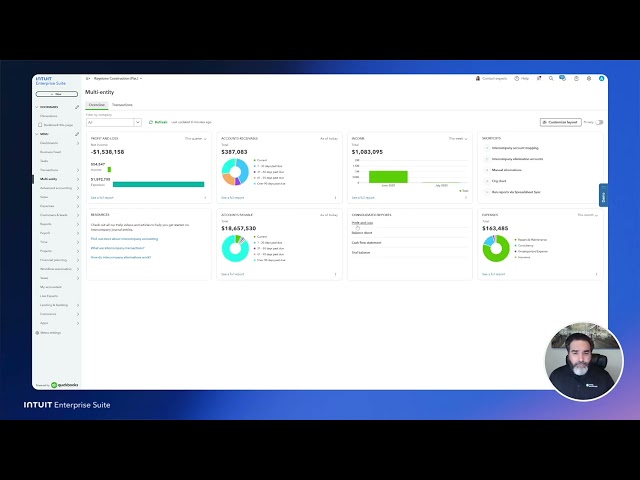
Cash flow software automatically aggregates financial data, balances, and transactions from multiple bank accounts, currencies, and separate legal entities into one unified, real-time dashboard. This helps deliver a single, authoritative view of liquidity across the entire organization.
As a CFO, this automation can eliminate the delays and risks associated with manually consolidating data from multiple sources in spreadsheets. 54% of those dissatisfied with their current suite of financial apps and tools point to manual entry as the biggest challenge. And 45% of businesses cite inadequate reporting and analysis as a significant limitation.
The right cash management platform drives efficiency and consistency across all consolidated reporting, while systematically eliminating the human error that manual processes introduce.

Cash forecasting
More than just reporting current balances, cash forecasting gives you forward visibility into your company’s future cash inflows and outflows. This helps you plan liquidity needs and make confident decisions on allocation and spending before pressure hits.
Cash forecasting uses historical data on accounts receivable (AR) and accounts payable (AP) to predict future cash surpluses or shortfalls accurately. This predictive intelligence enables you to proactively manage your working capital, determining when to invest, borrow, or adjust vendor payment terms.
A recent survey from Citizens Bank shows that 88% of businesses with a high level of insight through forecasting and reporting have an extremely or very good understanding of their organization's cash flow.

Liquidity management
Liquidity management is operationalized through automated cash pooling and sweeping. The system identifies idle cash across operational accounts and automatically sweeps it into a master account in accordance with your predefined treasury policies.
This automated positioning ensures you maximize interest earnings and reduce borrowing costs while maintaining the necessary entity-level cash for daily operations. According to recent studies, firms using these connected liquidity tools see a 40% increase in decision-making speed and a 30% improvement in operational efficiency.
Intercompany management
If you’re managing a multi-entity organization, intercompany transactions introduce significant complexity into cash flow management. Cash flow management software resolves this by automatically reconciling and invoicing intercompany transactions and eliminating them from your accounting reports.
Elimination is crucial for streamlining month-end close processes and ensuring financial reports accurately reflect external (non-intercompany) business activity. For enterprises with multiple entities, an integrated business solution is better suited to connect cash flow, accounting, procurement, and other critical multi-entity functions into a single centralized system.
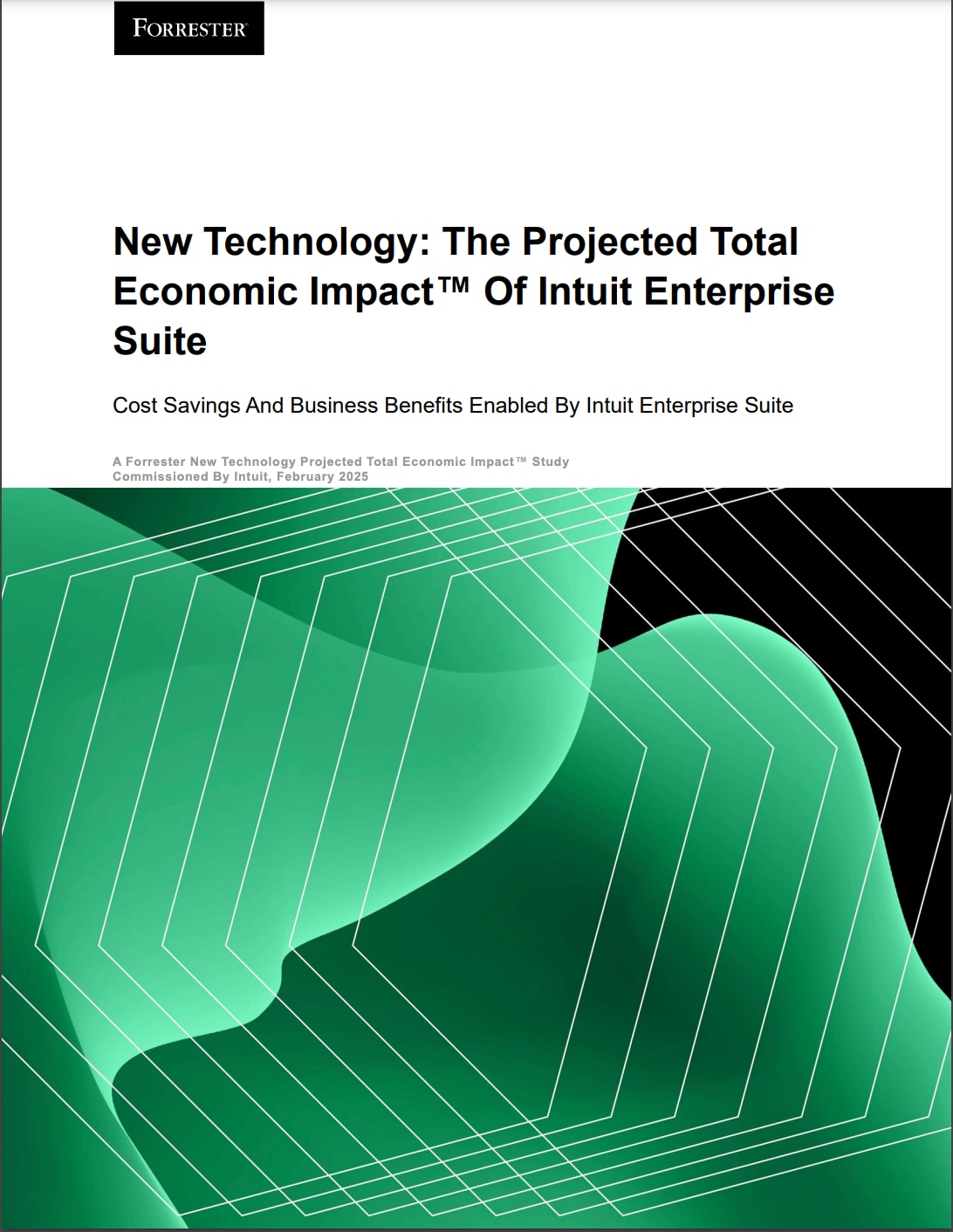
A study by Forrester Consulting showed that a multi-entity company using Intuit Enterprise Suite could save $127,334 over 3 years by improving efficiency in managing intercompany transaction accounting.

Comparing cash management solution alternatives: ERP vs. Treasury Management Systems (TMS)
Two of the most common cash management solutions are ERP and treasury management systems (TMS).
While both systems provide reporting, forecasting, and liquidity tools, their architectural roles within a finance stack differ significantly. For many enterprise firms, the decision is not necessarily binary; rather, it is about aligning system complexity with treasury requirements to optimize total cost of ownership (TCO) and ensure data integrity.
ERPs can handle everything from everyday accounting to supply chain management, and implementation can cost anywhere from a few thousand to several million. Modern ERP systems also deliver in-depth financial insights by connecting cash management with broader operational and financial data.
In contrast, a TMS offers deep specialization for high-complexity treasury needs, such as multi-layered hedging strategies, intricate debt portfolios, or high-volume global trade. While a specialized TMS can require a significant investment—often ranging from $400,000 to over $1 million—it is frequently deployed as a complementary layer to an ERP in environments where specialized treasury controls are a necessity.
Here's a breakdown to help you weigh both options.
The pros and cons of TMS
Designed for firms with a high level of financial risk, like those involved in global trading, foreign exchange (FX) hedging, and debt management, a TMS is a purpose-built tool for managing cash, liquidity, investments, and risk—for large enterprises like Lowe's, Amazon, and Global Bank Corporation.
For most multi-entity businesses, however, that level of complexity is overkill—and a TMS typically lacks the tools needed to support daily operational accounting.
The pros and cons of ERP
An ERP is a unified system that gives you centralized control over all aspects of your business, from supply chain and HR to finance and accounting. Its unmatched integration is especially beneficial for large, high-transaction-volume enterprises. An estimated 70% of large enterprises rely on ERPs for this level of operational cohesion.

The downside to an ERP often involves the cost. Implementation costs range from $100,000 to over $500,000, plus a long time-to-value (TTV), which can delay return on investment (ROI) for years. Because full ERP integration can take 6–12 months, it's often a poor fit if your company needs rapid, flexible growth.
The benefits of Intuit Enterprise Suite for cash management
While a TMS is specific to global trade, and traditional ERP systems are costly to implement, Intuit Enterprise Suite delivers the outcomes of both—without the tradeoffs of either.
Intuit Enterprise Suite delivers ERP-level outcomes with materially faster time-to-value, offering multi-entity automation and leveraging AI-backed workflows. This allows enterprise finance teams to quickly gain the necessary oversight and shift to a proactive, data-driven financial strategy without a heavy implementation burden.
The benefits of Intuit Enterprise Suite for cash management include the following:
Optimized ROI and total cost of ownership
Traditional ERPs can be costly. With licensing fees, implementation services, and training and support expenses, the total cost of ownership (TCO) can easily reach into the millions.
For a fraction of the cost, IES delivers the core capabilities you need to manage your cash flow and liquidity, including consolidated reporting, intercompany eliminations, and in-depth analytics.

In a Forrester Consulting study, a multi-entity company with $12 million in revenue was estimated to have an ROI of nearly $600,000 within the first three years of adopting the Intuit Enterprise Suite.
Immediate multi-entity business intelligence
The IES system gives multi-entity organizations the financial visibility and control that traditional systems can't match. With IES, you can manage users across multiple locations and subsidiaries while reconciling intercompany transactions and eliminations. Plus, consolidated reporting can help you make confident decisions on allocation and investments.
All of these capabilities are available in a matter of weeks, instead of the months-long rollout required for a traditional ERP system. For instance, when transitioning from QuickBooks to IES, FEFA Financial found the process straightforward—operational from day one, with no time-consuming migration.
Simplified compliance and audit readiness
Compliance and audit readiness are core to the IES model. All of your intercompany transactions and cash movements stay reconciled in a single system, enabling the audit process to run efficiently.
The features of the Intuit Enterprise Suite software also support compliance processes, including those involving generally accepted accounting principles (GAAP), international financial reporting standards (IFRS), local regulations where your business operates, and changes to labor laws. A tech company, for example, may find it easier to assign and track value for intangible assets.

When you schedule a demo, you agree to permit Intuit to use the information provided to contact you about Intuit Enterprise Suite and other related Intuit products and services. Your information will be processed as described in our Global Privacy Statement.
Boost productivity and enhance profitability
With cash management software, you can gain valuable insights into your business to guide strategic decisions. Whether you’re looking to expand, launch new products, or beat out the competition, cash management software can help you achieve your financial goals.
But why stop at just cash management? With a system like Intuit Enterprise Suite, you get so much more. Workflows such as intercompany transaction reconciliations are automated, and AI-powered tools provide personalized insights. Learn more now about how the IES system can increase your profitability and boost your productivity.
Check out upcoming events and learn more about Intuit Enterprise Suite.
Customer stories

Case Study
How FEFA Financial is growing with Intuit Enterprise Suite—without migrating to an ERP

Case Study
How this mission-driven, employee-owned company created efficiencies with Intuit Enterprise Suite
October 25, 2024

Case Study
Why this camping business chose Intuit Enterprise Suite over NetSuite
October 25, 2024

Case Study
Migrating to Intuit Enterprise Suite took 2 hours (with zero disruption) for this aspiring $50M revenue business
April 25, 2025

Case Study
Humble House Foods case study: How they improved visibility & simplicity using Intuit Enterprise Suite
September 24, 2025